
Medical Foods for Kidney Disease

Medical Food for Kidney Disease Patients
The kidneys are vital organs that help eliminate waste from the body. Consequently, a major consequence of kidney disease is the body’s inability to filter waste as it normally would. Therefore, dietary intake requires much greater attention to ensure the body receives the right amount of nutrients without accumulating excessive residual waste.
For this reason, medical foods play a crucial role for kidney disease patients, as they contain specific nutrients, can be consumed in safe quantities, and help kidney patients receive complete nutrition.
How to Eat Safely for Kidney Disease Patients When the kidneys cannot eliminate waste normally, patients and caregivers must pay attention to and carefully manage dietary intake and nutrient amounts to suit the body and the stage of the kidney disease. Dietary management for kidney patients differs between the pre-dialysis and post-dialysis stages:
Protein
- Pre-dialysis stage: Should consume high-quality proteins such as pork, chicken, fish, beans, egg whites, etc., in amounts of 0.6 – 0.8 grams per kilogram of body weight per day.
- Post-dialysis stage: Should consume protein in higher amounts than normal individuals to compensate for protein lost during dialysis, consuming 1.0 – 1.2 grams per kilogram of body weight per day.
- Caution: Avoid excessive protein intake, as protein increases blood acidity. If the kidneys cannot remove the waste, it can become dangerous to the body.
- Additionally, avoid proteins high in cholesterol, uric acid, and phosphates, such as animal organ meats and egg yolks.
Energy
End-stage renal disease patients should receive 30–35 kilocalories per kilogram of body weight per day, consisting of 60% carbohydrates (from starches and sugars) and 30% fats.
Minerals
Minerals are vital and have a profound impact on the body, including:
- Sodium: Kidney patients should limit sodium intake to no more than 2 grams per day, because excessive sodium causes thirst and increased water intake, leading to swelling, risk of pulmonary edema, and high blood pressure.
- Potassium: Dialysis patients often suffer from high potassium levels and should consume low- to moderate-potassium fruits and vegetables, such as water spinach, cabbage, lettuce, apples, grapes, and rose apples.
- Phosphorus: Blood phosphorus levels should be controlled to below 5.5 milligrams per deciliter, as excessive phosphorus can make bones brittle. Foods low in phosphorus include egg whites; consumption of eggs, milk, and nuts should be limited to appropriate amounts due to their high phosphorus content.
Water
Kidney failure patients should drink water, other beverages, and liquid foods in amounts of 500 – 700 milliliters per day. For end-stage renal failure patients, intake should not exceed 700 – 1000 milliliters per day. Excessive fluid intake can lead to swelling, increased blood pressure, heart failure, or pulmonary edema.
Fats
Avoid foods high in cholesterol, such as organ meats, eggs, junk food, and saturated plant and animal fats. Patients should obtain fats from unsaturated fatty acids such as soybean oil, rice bran oil, olive oil, and others.
What is Medical Food for Kidney Disease Patients?
Medical food for kidney disease patients comes in the form of powder for reconstitution or liquid food, providing complete nutrition with appropriate amounts of protein, vitamins, minerals, and other nutrients. These supplementary foods for kidney patients are divided into two stages:
1. Medical Food for Pre-Dialysis Kidney Patients
- Provides high energy up to 1.8 kilocalories per milliliter.
- Macronutrient distribution: 52% carbohydrates, 8% protein, and 40% fat.
- Protein sources from soy and casein.
- Low glycemic index, lactose-free.
- Appropriate mineral and electrolyte content.
2. Medical Food for Dialysis Kidney Patients
- Provides high energy up to 1.8 kilocalories per milliliter, similar to the pre-dialysis stage.
- Macronutrient distribution: 42–47% carbohydrates, 18% protein, and 35–40% fat.
- Low glycemic index, lactose-free.
- Vitamin A, sodium, potassium, and phosphorus levels tailored for this stage.
- Contains dietary fiber to support digestion.
Thai Otsuka Nutrition: Recommended Supplements for Kidney Patients
Since pre-dialysis and dialysis patients require different nutrient amounts, medical food supplements should be chosen appropriately for each stage. Thai Otsuka Nutrition offers medical foods that provide complete nutrition for kidney patients at each stage:
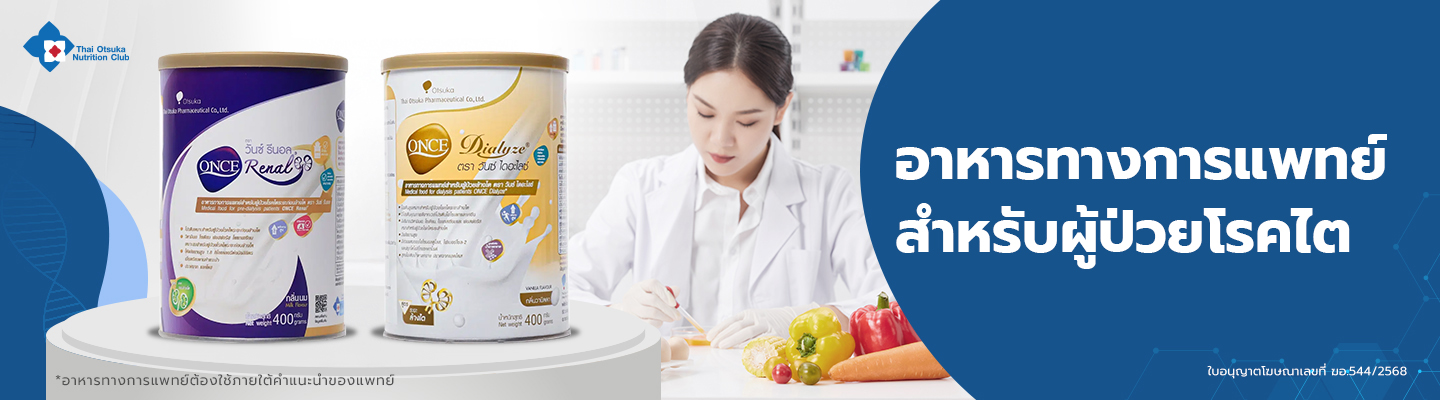
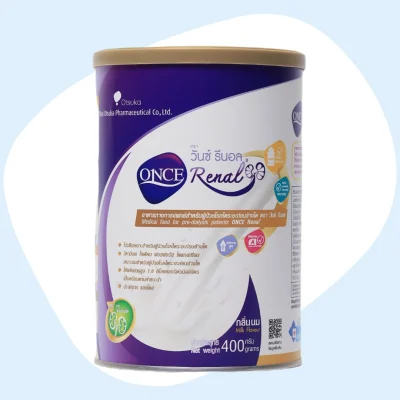
- ONCE Renal: A medical supplement for pre-dialysis patients. Provides appropriate, sufficient protein and energy, balanced vitamin and mineral control, and is lactose-free.
- ONCE Dialyze: A medical supplement for dialysis patients. Features high-quality protein from whey protein isolate and casein, high energy, sugar-free, lactose-free, and provides a balanced profile of vitamins and minerals.
Frequently Asked Questions (FAQ)
- Can diabetics consume ONCE Renal? ▶ Generally, kidney patients with diabetes can use ONCE Renal, but it must be under medical guidance. Diabetics must manage blood sugar levels properly, so carbohydrate and total daily nutrient intake must be carefully evaluated when adding a kidney supplement.
- Who is ONCE Renal suitable for? ▶ ONCE Renal is suitable for stages 1–3 chronic kidney disease (CKD) patients or those whose kidney disease has not yet reached the dialysis stage, as well as those needing to control protein, phosphorus, and potassium intake. It helps supplement nutrition on days with low food intake or risk of malnutrition.
- What is ONCE Renal? ▶ It is a medical food designed with a balanced ratio of proteins, fats, carbohydrates, and minerals specifically for chronic kidney disease patients. It reduces the workload on the kidneys while providing sufficient energy on days when food intake is low. It should be used appropriately under medical supervision.
- How should ONCE Renal be consumed? ▶ It can replace a meal or serve as a supplementary meal (1–2 glasses per day). Mix 5 scoops (1 scoop provides approx. 72 kcal) with 124 cc of water to yield a final volume of 200 cc. Consume immediately after mixing, or store in a clean container in the refrigerator and finish within 24 hours. Drink according to recommended medical amounts to match individual requirements.
- Where can I buy ONCE Renal? ▶ Priced around 383 baht per can (400-gram size), it is available at pharmacies, hospitals, and online stores:
- Lazada: Otsuka Official Store
- Shopee: Thai Otsuka Official
- Facebook: Thai Otsuka Nutrition Club
- LINE OA: @thaiotsuka
- Instagram: @thaiotsuka
- What can kidney disease patients eat? ▶ Foods that reduce kidney workload and appropriately control filtered nutrients:
- Proteins: Limit amounts, choose high-quality sources like egg whites, fish meat, skinless chicken breast, and trimmed tenderloin pork (amounts depend on disease stage and doctor’s advice).
- Carbohydrates: Rice, vermicelli, flat rice noodles, unrefined whole grains, and protein-free starches.
- Fruits & Vegetables: Low-potassium options such as apples, grapes, rose apples, cabbage, angled luffa, and cucumbers.
- Fats: Rice bran oil, peanut oil, sesame oil, or olive oil in small amounts.
- Avoid: High-sodium foods (salty, processed), high-potassium, and high-phosphorus foods. Drink water per medical advice. Stage 1–3 CKD patients may use pre-dialysis medical foods after evaluation and adjustment by medical professionals.
- What foods should kidney disease patients avoid? ▶ Foods that overwork the kidneys or raise blood levels of certain minerals too high—especially potassium, phosphorus, and sodium—which can affect the heart, cause water retention, or accelerate kidney decline.
- Can ONCE Renal be used with feeding tube equipment? ▶ Yes, but it should be done under medical supervision to adjust the flow rate, viscosity, and volume appropriately for each patient.
- Can dialysis patients consume it? ▶ Dialysis patients should use formulas specifically designed for them, such as ONCE Dialyze. ONCE Renal is intended for patients before the dialysis stage.
- Can healthy individuals consume it? ▶ Yes, but people with normal kidney function generally do not need kidney medical foods, as these formulas are specifically tailored for patients.
📌 For more information:
- Facebook: Thai Otsuka Nutrition Club
- LINE OA: @thaiotsuka
- Instagram: @thaiotsuka
- Where to buy: Hospitals and pharmacies nationwide, or online via Otsuka Official Store on Lazada and Shopee.